

Between the doom-scrolling, the hustle culture, and the general state of the world, our mental health is constantly being put to the test. But for millions of Americans, the struggle isn’t just singular—it’s a double feature. This is the reality of dual diagnosis.
If you or someone you love is navigating the intersection of mental health struggles and substance use, you might feel like you’re trying to solve a Rubik’s cube in the dark. But here is the good news: You aren’t alone, and this is solvable.
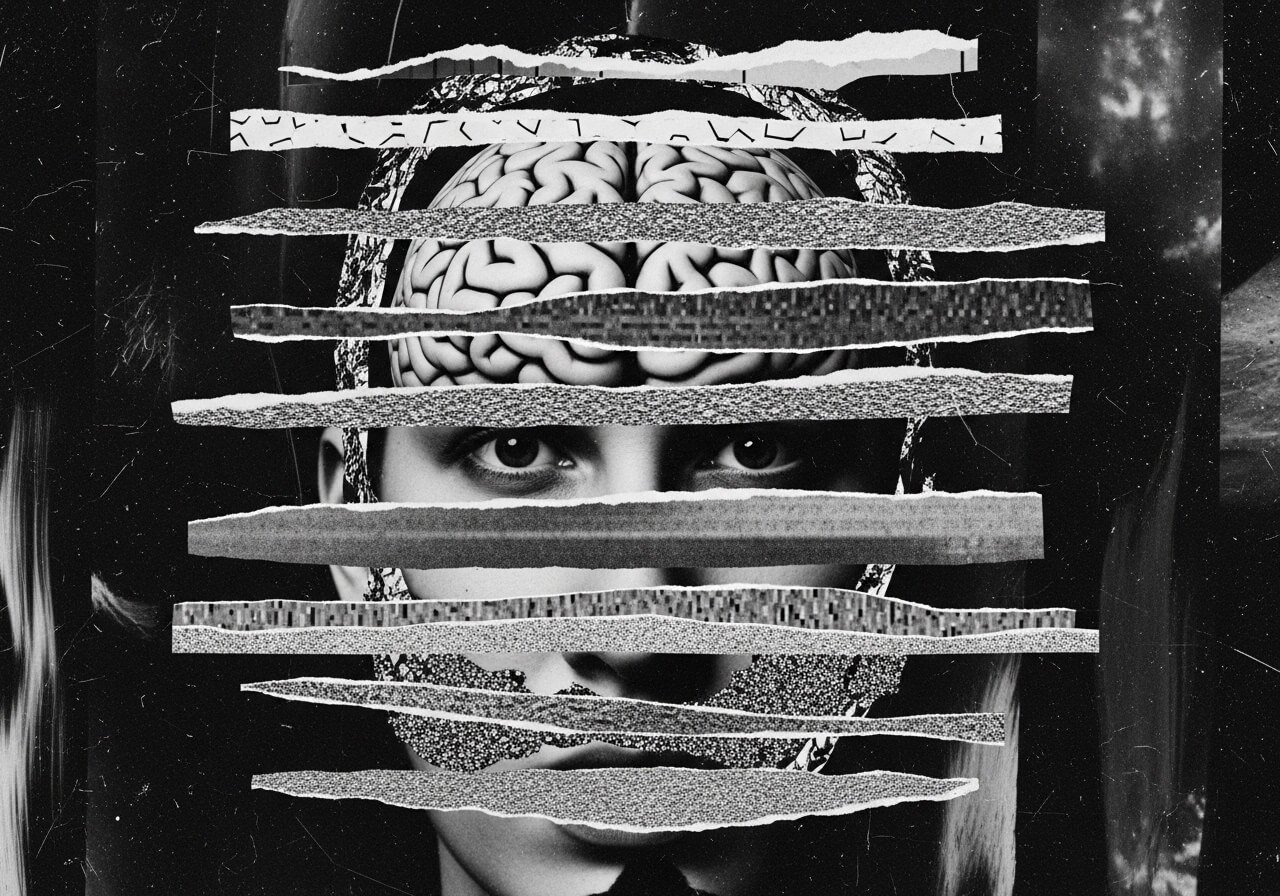
A conceptual paper collage representing the layered complexity of dual diagnosis—where mental health and substance use disorders intersect.
Whether you are looking for answers for yourself or trying to figure out how to support a bestie or partner, we are breaking down the science, the myths, and the evidence-based solutions. We’re channeling the vibe of top mental health resources (like the experts at Refresh Recovery) to bring you a guide that is equal parts empathetic and educational.
The Remix Nobody Asked For: What is Dual Diagnosis?
First things first—let’s define the terms. In the clinical world, you might hear this referred to as co-occurring disorders. According to the Substance Abuse and Mental Health Services Administration (SAMHSA), dual diagnosis occurs when a person experiences a mental illness and a substance use disorder (SUD) simultaneously.
It’s not a rare anomaly; it’s actually incredibly common. Research indicates that nearly 9.2 million adults in the U.S. have co-occurring disorders. It’s the classic “chicken or the egg” scenario. Did the anxiety lead to the drinking? Did the drug use trigger the depressive episode?
Top mental health professionals explain that it manifests as a cycle of self-medication and symptom exacerbation. Here is what that looks like in real time:
- The “Numbing” Effect: Someone with undiagnosed ADHD or PTSD might use cannabis or alcohol to quiet a racing brain. It works… until it doesn’t.
- The Chemical Rebound: Substance use alters brain chemistry (specifically dopamine and serotonin), which can mimic or worsen symptoms of bipolar disorder or major depression.
- Functional Friction: It often manifests as extreme mood swings, withdrawal from the squad, financial secrecy, or a sudden drop in performance at work or school.
Dr. Nora Volkow, Director of the National Institute on Drug Abuse (NIDA), emphasizes that because both conditions affect the same brain circuits, they must be treated as an interconnected web, not separate issues.
Busting the Stigma: Top Myths Society Believes About Dual Diagnosis
If we want to know how to support dual diagnosis effectively, we have to unlearn the nonsense society has fed us. The stigma is real, but the facts are louder. Let’s debunk the top myths preventing people from getting help.
Myth #1: “You have to get sober before you treat the mental health issue.”
The Reality: This is old-school thinking (we’re talking VHS tape era). Modern evidence-based research supports Integrated Treatment. If you treat the addiction but ignore the trauma, a relapse is almost guaranteed because the root cause remains. If you treat the depression but ignore the addiction, the therapy won’t stick. They must be tackled together.
Myth #2: “It’s just a lack of willpower.”
The Reality: Let’s stop this narrative right now. Addiction and mental illness are physiological changes in the brain. You wouldn’t tell someone with diabetes to “just manifest more insulin.” The National Alliance on Mental Illness (NAMI) confirms that genetic predisposition and environmental factors play a massive role here. It’s biology, not a character flaw.
Myth #3: “They are having fun; they don’t want to stop.”
The Reality: By the time a dual diagnosis is established, the “fun” usually ended a long time ago. Most people are stuck in a cycle of using substances to feel “normal” or to avoid the crushing weight of withdrawal and psychiatric symptoms.
The Leaderboard: Top Therapies for Dual Diagnosis (Ranked by Impact)
Not all therapy is created equal. When looking for treatment, you want high-yield, evidence-based modalities. Based on research from the National Institutes of Health (NIH) and clinical outcomes, here are the heavy hitters ranked by their impact on co-occurring disorders.
1. Integrated Dual Diagnosis Treatment (IDDT)
The Vibe: The Gold Standard.
The Science: This isn’t a single therapy technique but a structural model. It ensures that the same team of providers treats both the mental health and substance use issues simultaneously. No bouncing between two different clinics.
Why it Wins: Studies show IDDT leads to higher retention in treatment, fewer hospitalizations, and better quality of life.
2. Dialectical Behavior Therapy (DBT)
The Vibe: Emotional Regulation Bootcamp.
The Science: Originally developed for Borderline Personality Disorder, DBT is a powerhouse for dual diagnosis. It focuses on four modules: mindfulness, distress tolerance, emotion regulation, and interpersonal effectiveness.
Why it Wins: It teaches you how to sit with uncomfortable feelings without needing to numb them. It reduces self-harm behaviors and substance cravings significantly.
3. Cognitive Behavioral Therapy (CBT)
The Vibe: Rewiring the Logic Board.
The Science: CBT helps you identify the negative thought patterns (“I’m a failure”) that lead to behaviors (“I might as well get high”). It’s about catching the thought before it spirals.
Why it Wins: It is highly structured and practical. It gives patients tangible tools to use in the real world when triggers hit.
4. Medication-Assisted Treatment (MAT)
The Vibe: Biological Backup.
The Science: This involves using FDA-approved medications (like buprenorphine or naltrexone) alongside counseling. It stabilizes brain chemistry to reduce cravings.
Why it Wins: It saves lives. By quieting the physical addiction, the patient has the mental clarity to engage in talk therapy.
Red Flags: How to Know When to Get Help
Sometimes the signs are subtle. It’s not always a dramatic movie scene. If you are wondering if you or a loved one has crossed the line from “partying” or “feeling down” into dual diagnosis territory, look for these indicators:
- Tolerance Shifts: Needing more of the substance to get the same effect, or feeling like your psychiatric meds “stopped working.”
- Isolation: Ghosting friends and family to hide usage or depressive episodes.
- Using to Cope: Specifically using substances to manage anger, anxiety, or insomnia.
- Loss of Control: Setting rules (“I’ll only drink on weekends”) and consistently breaking them.
- High-Risk Behavior: Driving under the influence, unsafe sexual encounters, or spending rent money on substances.
If you check more than one of these boxes, it is time to call in the pros.
How to Share It (Or Ask About It) With a Loved One
This is the scary part. Talking about mental health and addiction requires vulnerability, and let’s face it, that’s terrifying. But silence is where the disease thrives. Here is how to handle “The Talk” without it turning into a screaming match.
If You Are the One Struggling:
You don’t need to have a PowerPoint presentation ready. Keep it simple.
“Hey, I’ve been struggling with my mental health lately, and I think my drinking/using is making it worse. I’m scared and I think I need help finding a professional.”
Real friends and family will respect the honesty. You are inviting them to be part of your solution, not your problem.
If You Are Concerned About Someone Else:
Approach with curiosity, not judgment. Avoid “You always” statements. Try the “I” approach:
“I’ve noticed you haven’t been yourself lately, and I’m worried about you. I love you too much to watch you hurt. Have you thought about talking to someone?”
Pro Tip: Do this when they are sober and calm. Attempting this conversation while they are intoxicated is a recipe for disaster.
TL;DR: The Casual Wrap-Up
Okay, that was a lot of information. If you scrolled to the bottom (we see you), here is the spark notes version on how to support dual diagnosis:
- It’s a Combo Deal: Dual diagnosis means having both a mental health disorder and a substance use disorder. They feed off each other like a toxic relationship.
- Ditch the Myths: It’s not a lack of willpower, and you don’t have to treat them one at a time. Treat them together for the win.
- Trust the Science: Look for Integrated Treatment. Therapies like DBT and CBT are the MVPs of recovery.
- Speak Up: Whether it’s you or a friend, the conversation is the first step. Be real, be kind, and drop the judgment.
Recovery isn’t a straight line—it’s a squiggle. But with the right support, the right therapy, and a little bit of courage, that squiggle starts moving upward.
If you are ready to explore what integrated treatment looks like, or just need to ask a question, resources are available. Check out the comprehensive care options at Refresh Recovery in San Diego to start the journey toward a refreshed life.
Valerie T.
